Soft Training Treats
Easy to break apart for fast, frequent rewards during short sessions.
Shop on Amazon →Educational guide to helpful dog training tools including treats, long leads, harnesses, beds, clickers and puzzle feeders.
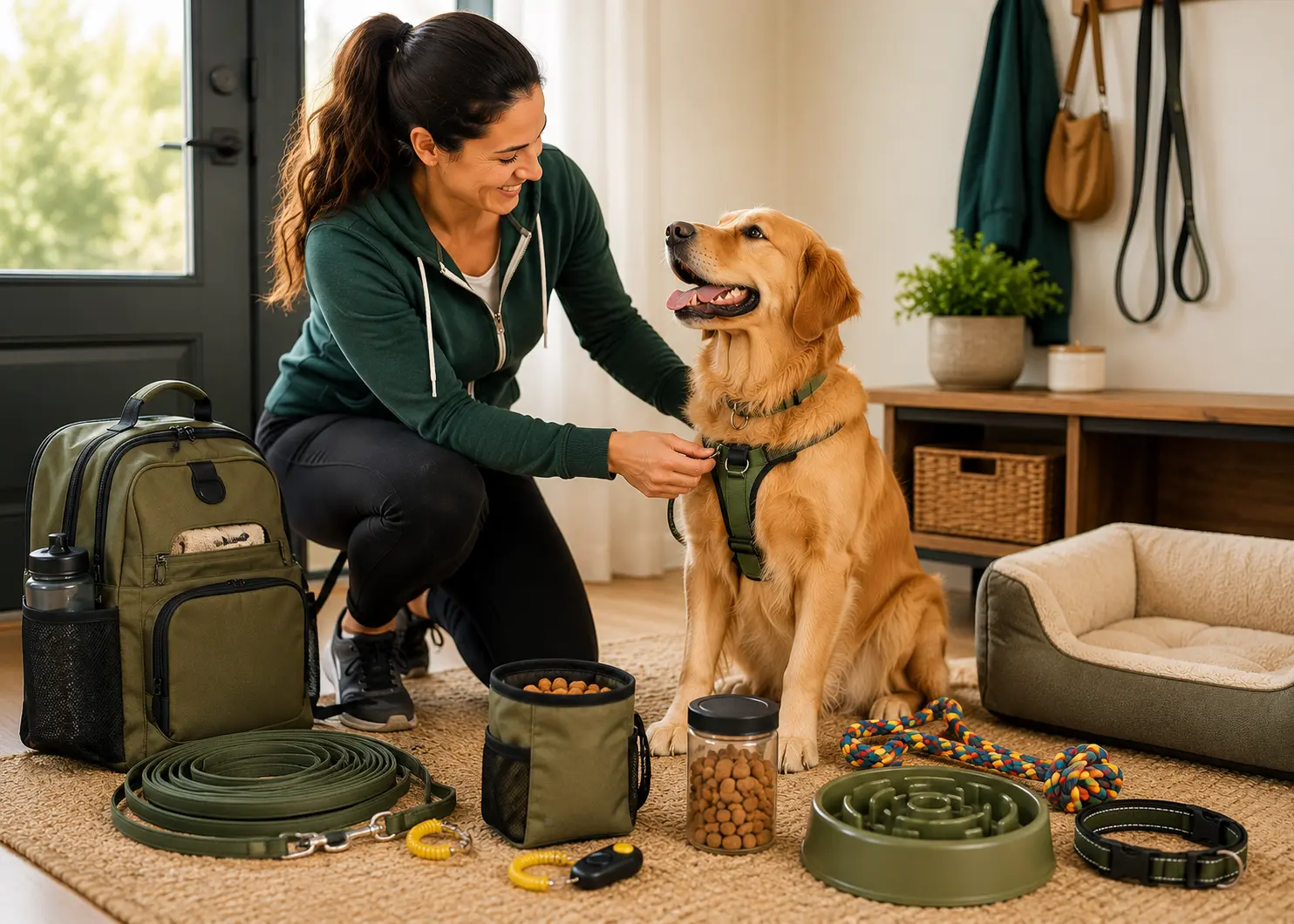
By Sam Whitfield · Last updated July 2026
Use this guide as a practical starting point. Dog training works best when it is clear, kind, consistent and easy to repeat.
This page contains affiliate links. If you buy through a link here, we may earn a commission at no extra cost to you. See our Affiliate Disclosure for details.
Small, soft treats can make reward timing easier. Choose treats that are easy to break into tiny pieces so training stays quick and focused, and keep a stocked pouch on hand so you're never scrambling mid-session.
Not every treat needs to be "high value" — save the extra-tasty options like small pieces of chicken or cheese for tricky distractions, and use a plainer, lower-calorie treat for easy repetitions at home. Pea-sized pieces work well for most dogs, since they're quick to eat and don't fill your dog up halfway through a session. Factoring training treats into your dog's daily food amount helps avoid overfeeding on a day with a lot of practice.
A long training lead can help practise recall safely in open areas before giving a dog more freedom. Look for a lead between 15 and 30 feet with a comfortable, easy-grip handle.
A fixed-length long lead is usually a better training tool than a retractable one — the constant spring tension in a retractable leash can actually teach a dog to pull against it, which works against what you're trying to build. Biothane or nylon are both easy to clean and hold up well outdoors; just look for a lead that's easy to gather and let out smoothly, since a tangled lead makes a session frustrating fast.
A comfortable harness can support better walking habits, especially while you are teaching leash manners and focus. A well-fitted, no-pull style reduces strain on both ends of the leash.
Front-clip harnesses tend to help most with pulling, since the leash redirects a dog gently sideways rather than letting them lean forward into it. Back-clip styles are more comfortable for dogs that already walk well and don't need that extra guidance. Whichever style you pick, a good fit check is simple: you should be able to fit two fingers snugly under any strap, with no rubbing at the legs or throat.
Mental stimulation can reduce boredom and support calmer behaviour between walks and training sessions. Puzzle feeders slow down fast eaters and give anxious or bored dogs something constructive to do.
Not all puzzle feeders are the same difficulty — a dog new to enrichment toys can get frustrated by one built for experienced dogs, which can put them off trying again. Start simple, like a slow-feed bowl or an easy treat-dispensing ball, and work up to trickier puzzles as your dog gets the hang of it. Rotating two or three different toys keeps them feeling novel instead of becoming background furniture.
A few habits lead to gear that ends up unused in a drawer:
A few starting points for each category above.
Easy to break apart for fast, frequent rewards during short sessions.
Shop on Amazon →Gives your dog room to practise recall safely before going leash-free.
Shop on Amazon →Comfortable, well-fitted support for teaching better leash manners.
Shop on Amazon →Slows down fast eaters and gives bored dogs something to work for.
Shop on Amazon →The right tools work best alongside the right method. See the free workshop from the K9 Training Institute on training your dog using body language, not just gear.
A collar works well for everyday wear and holding ID tags, but a well-fitted harness spreads pressure across the chest rather than the neck, which makes it more comfortable for dogs still learning not to pull. Many owners use both: a harness for walks and training, and a collar for tags.
Retractable leashes aren't ideal for structured training because the constant tension teaches a dog to pull against the lead. A fixed-length long lead gives the same freedom to roam and practise recall without that built-in pulling habit.
For short, focused sessions of a few minutes, a handful of pea-sized treats is usually plenty. Breaking treats small and factoring them into your dog's daily food intake helps avoid overfeeding during regular practice.
They help most with boredom-driven behaviour like excessive barking or destructive chewing, by giving a dog a constructive outlet. They work best alongside training and exercise rather than as a stand-alone fix for a specific behaviour problem.
Pick one idea from this page and practise it for a few minutes today. Small improvements repeated consistently can make training feel easier over time.