Training Clicker
Helps you mark the exact moment your dog gets it right.
Shop on Amazon →Practical dog training tips for calmer behaviour, better focus, recall, leash walking and everyday obedience.
By Sam Whitfield · Last updated July 2026
Use this guide as a practical starting point. Dog training works best when it is clear, kind, consistent and easy to repeat.
This page contains affiliate links. If you buy through a link here, we may earn a commission at no extra cost to you. See our Affiliate Disclosure for details.
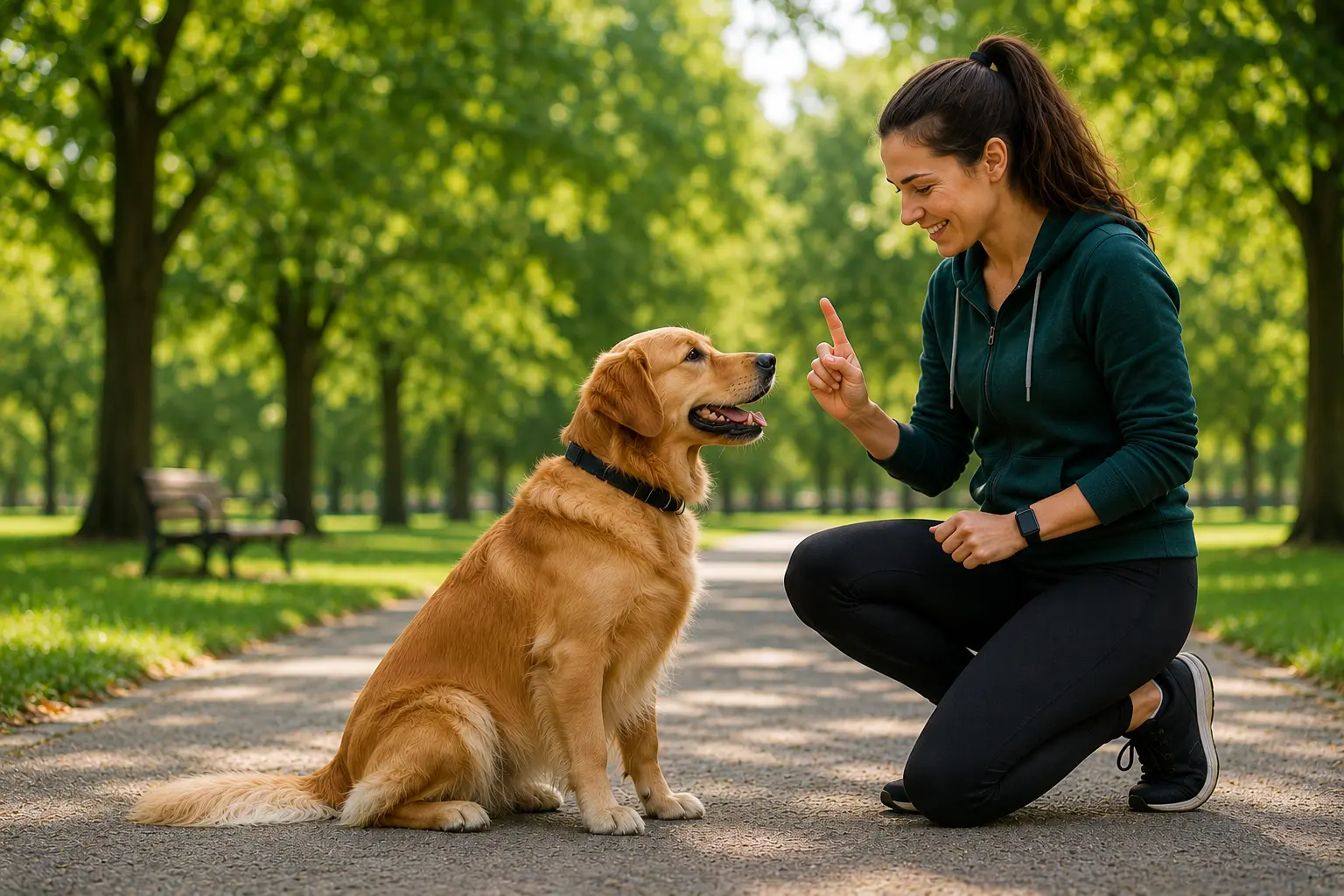
Dogs learn more easily when training is clear and consistent. Focus on one behaviour, reward it quickly, and practise in short sessions before adding distractions. A clicker or a consistent marker word can help you pinpoint the exact moment your dog gets it right.
A simple way to start: pick one cue, like "sit." Say it once, guide your dog into position if needed, and reward the instant they get there. Practise in the same quiet spot for a few days before changing anything else. Trying to teach three or four new cues at once is one of the most common reasons training stalls — dogs, like people, learn faster when they're not being asked to juggle too much at once. Only add a second cue once the first one is reliable with no guiding needed.
Food rewards, praise, play and access to something enjoyable can all help your dog understand what worked. The key is timing: reward the calm or focused behaviour as soon as it happens, so keep small, soft treats close at hand.
Dogs associate a reward with whatever they're doing in that exact moment — not what happened five or ten seconds earlier. A reward that arrives even a couple of seconds late can end up reinforcing the wrong thing entirely, like fidgeting instead of the sit you were rewarding. Food isn't the only option either: a favourite toy, a chance to sniff something interesting, or simply continuing a walk can all work as rewards once your dog understands the game.
A few focused minutes repeated regularly can work better than one long frustrating session. End while your dog is still engaged, then build gradually. A treat pouch on your belt keeps rewards fast so you don't lose momentum mid-session.
Most dogs do better with three to five short sessions spread through the day than one long block of training. Watch for signs your dog has checked out — sniffing away, slower responses, or wandering attention — and treat that as your cue to stop, not push harder. Ending on a success, even a small one, makes your dog more likely to want to engage again next time.
Once your dog understands a cue indoors, practise in the garden, on quiet walks, and around mild distractions. This helps the behaviour become useful outside training time. A longer lead gives your dog room to practise recall safely before going leash-free.
Dogs don't automatically transfer what they've learned from one place to another — a rock-solid "sit" in your kitchen can fall apart completely at the park. Build up gradually: quiet room, then garden, then a quiet street, then somewhere busier, only moving on once your dog is reliable at the current level. This step-by-step approach, sometimes called generalisation, is what turns a trick your dog does at home into a behaviour you can actually rely on out in the world.
A few habits quietly undo more training progress than almost anything else:
A few starting points for each idea above.
Helps you mark the exact moment your dog gets it right.
Shop on Amazon →Easy to break apart for fast, frequent rewards during short sessions.
Shop on Amazon →Keeps rewards within reach so timing stays quick and consistent.
Shop on Amazon →Gives your dog room to practise recall safely before going leash-free.
Shop on Amazon →See how service-dog trainers get this level of focus and calm using body language, in a free workshop from the K9 Training Institute.
Most dogs start showing real progress on a new cue within a week of short daily sessions, but reliable behaviour around distractions can take a few months of consistent practice. Puppies and dogs new to training often need longer than dogs who already understand how to learn.
Try a higher-value treat such as small pieces of cooked chicken or cheese, train before a meal rather than after, and reduce distractions until the behaviour is solid. A dog that won't take food is often over-threshold, not stubborn.
Reward-based methods that focus on what you want your dog to do instead tend to build more reliable, longer-lasting behaviour than punishment, and avoid the fear or confusion that harsher corrections can cause.
You can start simple, gentle training from the day a puppy comes home, usually around 8 weeks old. Short, positive sessions early on build the foundation for everything that follows, and it's never too late to start with an older dog either.
Pick one idea from this page and practise it for a few minutes today. Small improvements repeated consistently can make training feel easier over time.