Puppy Crate
A consistent, calm space that makes routine-building easier.
Shop on Amazon →Simple puppy training basics for toilet habits, chewing, crate comfort, confidence and early obedience.
By Sam Whitfield · Last updated July 2026
Use this guide as a practical starting point. Dog training works best when it is clear, kind, consistent and easy to repeat.
This page contains affiliate links. If you buy through a link here, we may earn a commission at no extra cost to you. See our Affiliate Disclosure for details.
Puppies feel safer when meals, toilet breaks, play and rest follow a simple pattern. Predictability also makes toilet training easier. A properly sized crate gives your puppy a consistent, calm space of their own.
A simple routine to start from: outside first thing in the morning, after every meal, after naps, and after play — those are the moments a puppy is most likely to need to go. Take them to the same spot each time and reward immediately after they go, not after you're back inside. Puppies who follow this kind of predictable pattern tend to get reliable much faster than puppies on an unpredictable schedule.
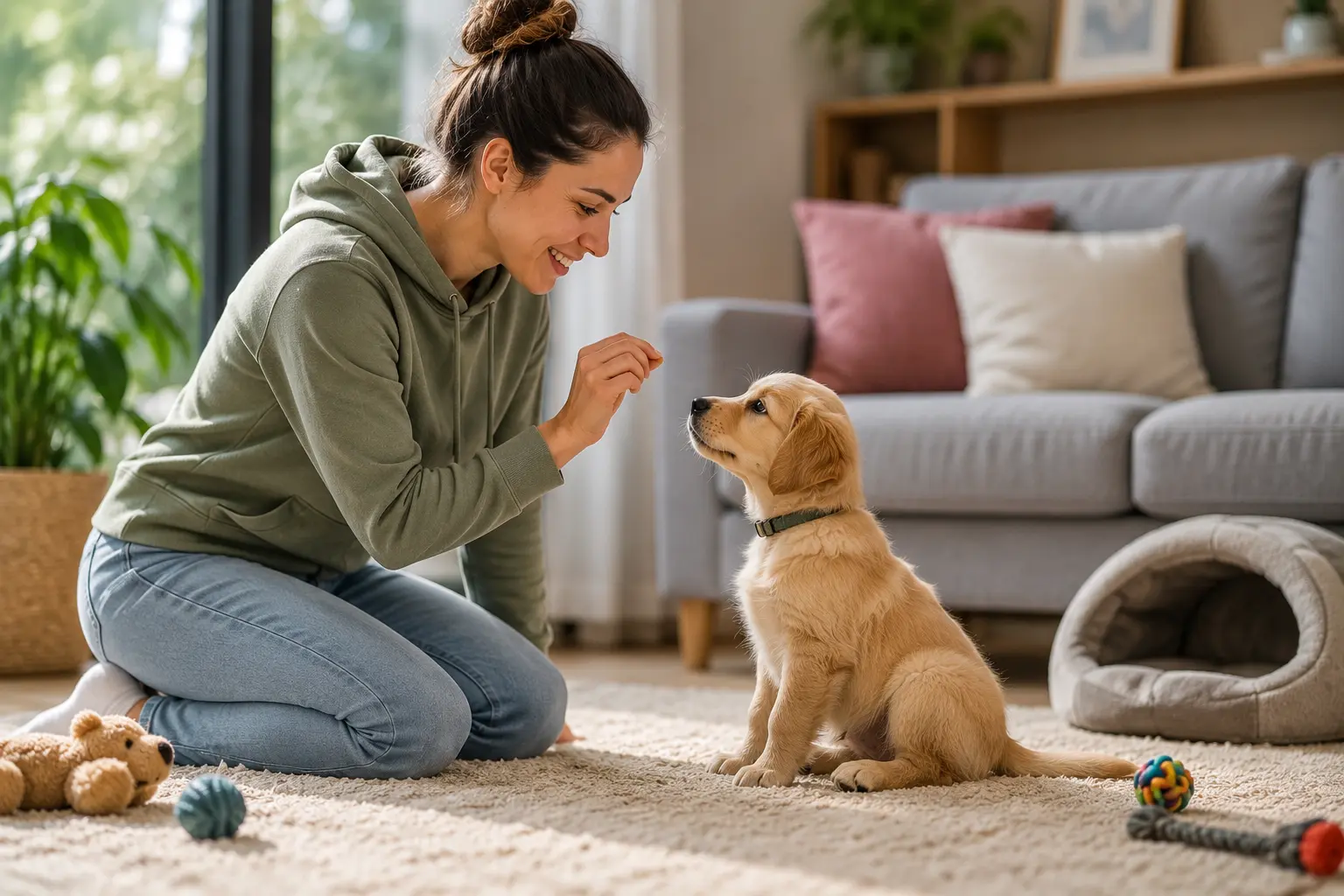
Notice the tiny wins: sitting calmly, chewing the right item, following you, settling in a bed or going outside successfully. Early rewards shape future habits — keep soft, easy-to-eat treats within reach.
It's easy to only notice a puppy when they're doing something wrong, but "catching them being good" is one of the most effective habits you can build as an owner. If your puppy is quietly chewing a toy instead of the sofa, or sitting instead of jumping up, a quiet "good" and a small treat teaches them that calm behaviour is what gets your attention — not just barking, jumping or grabbing things.
Puppies explore with their mouths. Keep tempting items out of reach and offer safe chew options before chewing becomes a problem.
Chewing is partly exploration and partly teething, and it isn't something you can train away completely — the goal is redirecting it, not stopping it. Keep two or three appropriate chew toys in each room your puppy spends time in, so there's always something acceptable close by. If they pick up something they shouldn't, calmly swap it for an approved chew rather than just taking it away, so they still get something satisfying out of the exchange.
Introduce new sounds, surfaces, people and places gradually. Calm exposure and positive experiences can help puppies become more resilient. A treat pouch makes it easy to reward calm behaviour on the go.
Puppies go through a key socialisation window roughly between 3 and 16 weeks old, where new experiences are absorbed more easily and have an outsized effect on adult temperament. That doesn't mean flooding them with everything at once — gentle, positive exposure to a few new sounds, surfaces or faces a week, always paired with treats and a calm tone, builds far more lasting confidence than a single overwhelming outing.
A few habits tend to slow puppy training down more than owners expect:
A few starting points for each idea above.
A consistent, calm space that makes routine-building easier.
Shop on Amazon →Easy to break apart for fast, frequent rewards during short sessions.
Shop on Amazon →Safe options to redirect chewing before it becomes a habit.
Shop on Amazon →Keeps rewards handy for calm exposure to new places and people.
Shop on Amazon →For everyday puppy essentials, visit Northvale Pets →
The earlier you introduce the right techniques, the easier training becomes. See the free workshop from the K9 Training Institute on training with body language from day one.
Most puppies get the basics of potty training within a few weeks of consistent routine, though full reliability often takes four to six months. Smaller breeds and puppies from less consistent early environments can take longer.
You can start simple, gentle training the day your puppy comes home, typically around 8 weeks old. Short, positive sessions early on — even just a few minutes a day — build the foundation for everything that follows.
Not when it's introduced gradually and kept positive. A crate that's built up slowly, with treats, meals and comfort inside, tends to become a puppy's own safe space rather than something to fear. It becomes a problem only when it's used as punishment or for excessively long periods.
Redirect onto an appropriate chew toy the moment biting starts, and calmly pause play if biting continues on skin or clothing. Puppies are exploring and teething, not being aggressive, so consistency and redirection work far better than scolding.
Pick one idea from this page and practise it for a few minutes today. Small improvements repeated consistently can make training feel easier over time.